
Roof Decking (AKA Roof Sheathing): What You Need to Know
Take a look at your roof, and the only thing you’ll see is the shingles or tiles at the top. Ever wondered what lies beneath those tiles covering your roof?
A roof isn’t only made of what we see on the surface. It has multiple layers and much of it remain invisible from the outside. The primary layer that supports the weight of the roof and passes it on to the house’s main structure is — the roof decking itself.
Most of us have never looked below the top layer of a roof except for pro roofers when they work on building it, repairing or reroofing. So, it’s completely fine to be unfamiliar with the concept of roof decking.
So let’s see what roof decking is and why it has a key role in any roofing system.
What is Roof Decking?
Before we start, let’s clear the confusion about roof decking vs. sheathing on a roof.
Both terms point to the same component of the roof system and are used interchangeably.
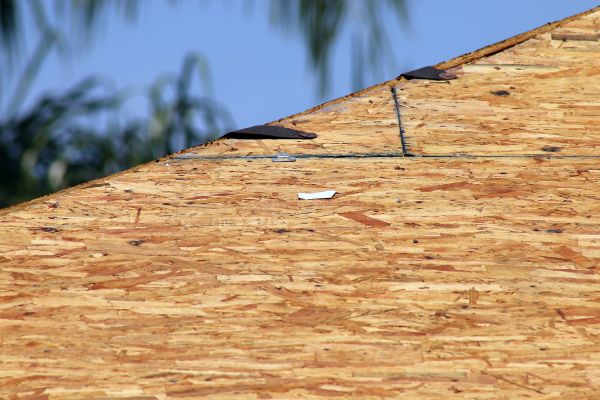
Roof sheathing or decking is a layer placed over the roof’s structural components such as the trusses, joists, rafters — in other words, over the roof skeleton. Whatever type of roof you have, the decking is a must.
This layer works like a foundation of a roof, forming a base for installing the shingles and other top components. Without this base, the roof wouldn’t be a rigid and stable structure that it absolutely needs to be.
Here’s a list of what the decking does:
- It delegates stability to the outer materials like the shingles so that they can be more secure.
- The decking distributes the weight throughout the roof structure evenly, so that nothing can sag or collapse when the roof gets overloaded.
- It helps keep moisture out as it acts like a protective seal between your home and the weather.
- In turn, the insulation resulting from it also helps to make your home more energy efficient.
- Not a direct concern for homeowners, but the solid foundation of decking makes it easy for roofers to conduct roof repairs and replacements.
There’s another common confusion we need to get out of the way before we continue.
While roof decking and sheathing are the same, decking and roof underlaying are NOT.
The roof underlying is an additional layer placed on top of the decking — a sort of extra layering for the decking itself by way of more protection, especially from moisture. Just like decking, it can also be made of different materials.
Pro tip: While placing an underlying over the roof sheathing, make sure that the roof system can breathe by adding attic ventilation. You don’t want the roof to trap moisture inside your home.
3 Roof Decking Types
In most cases, we’ll be talking about 2 main options — sheet and plank decking.
There are other options as well, such as metal, but they are mostly used in industry.
Whichever type you pick, you need to make sure to figure out the correct thickness of the sheathing, to align it well, and use the right fixtures.
Sheet Decking
In this process, the roof is covered by flat panels of plywood, cementitious boards, or oriented strand board or OSB. (More on the latter below!)
How thick does the material need to be? It depends from multiple factors that we’ll turn to in a bit.
The point is, the sheet is easy to install and it provides a continuous surface, offering better protection against moisture.
Plank Decking
This type of roof decking uses rectangular wooden boards that are placed side-by-side.
While it sounds uncomplicated, the process is labour-intensive and the gaps between the planks can be large enough for sneaky water vapours to rush in. It used to be THE option for roof decking throughout the 20th century. Nowadays, you’ll mostly see sheet decking instead.
Metal Decking
In this case, metal means steel. So it’s not easy to guess: metal decking offers excellent durability and fire resistance, making it ideal for industrial use. In other words, multi-storey apartment buildings, warehouses and such.
This type is available in various profiles, and the deeper ones with high thickness (or gauge, as it is technically called) can support heavier weights.
As you can imagine, it’s more expensive than the other two options. That’s exactly why it’s very rarely used, if ever, in residential roofing.
Pros & Cons of Common Roof Sheathing Materials
The choice of materials will impact 2 things: the durability of your roof decking and, of course, the final cost.
Here is a quick rundown of the most popular choices.
Plywood
Made from composite wood layers glued together, plywood is a durable and lightweight material. There are various grades of plywood available and you need to be careful about picking the right grade for roof sheathing.
The most common option in roof decking is the so-called CDX plywood.
The C and D signify the rating of the plywood, and X tells you that an exterior-grade adhesive was used to glue the plywood together. As a result, CDX offers good durability at an affordable price and even though it’s not waterproof, it is fairly moisture-resistant.
Oriented Strand Board (OSB)
In simplest terms, OSB is made by pressing flat wood strands together with strong glue and heating them to create a sturdy board. The particles are then arranged in cross-oriented layers. That’s how a solid panel of uniform strength gets made.
The advantage of OSB is its affordability and high strength which makes it less prone to warping than plywood.
That’s not the end to its advantages over plywood. While plywood is made from big and old, large-diameter trees, OSB can be made from smaller-diameter trees that take much less time to grow. That way, it’s a greener option than plywood.
But that doesn’t mean it’s all sunshine and roses.
One of its downsides is that OSB is heavier than plywood and can swell up more if it does get wet. Moreover, it holds onto moisture for longer periods.
To make it more functional in rainier areas, it’s possible to coat the board edges with water-resistant materials.
Concrete
Concrete roof decking is used when the load on the roof is very high. That’s right: too high to be warranted in residential roofing. You’ll encounter it in commercial, but most commonly industrial building where there are flat roofs that regularly host super heavy machinery.
It can be set in precast boards with additional bars placed in as reinforcement.
Concrete is highly durable, an excellent insulator, and can withstand rough weather like a champ. Plus, it’s non-combustible and a greener option as it doesn’t need wood.
How Thick Does Roof Sheathing Need to Be?

Yes, thickness matters too in sheathing/decking.
If you choose a layer that is too thin, it might buckle or sag under loads. But don’t expect to find any formulas online. The calculations are complex and are done by an experienced roofing company or a structural engineer.
In the end, you want a robust roofing system that will protect your home. So evaluating all these factors against your budget is a must.
It’s worth adding that calculating the exact cost of re-decking or re-sheathing in advance is difficult or even downright impossible. After all, you need to take into account many variables like the condition of the existing sheathing, roof size, material, and more.
It’s not just about the contractors estimations either. It might be worth or even necessary to check with your local building department as well as the National Construction Codes (NCC), to pick the necessary roof thickness. While the integrity of your roof is crucial, you don’t want to fall short of legal obligations either.
Consider the Climate
If heavy rainfall is common where you live, a thicker layer of roof decking will provide better moisture resistance.
In snowy NSW locations like, say, Thredbo and Perisher, the excess snow load demands a thicker roof. A thick roof decking will be able to bear snow loads without buckling, and will also provide better insulation.
Calculate the Load
The thicker the roof decking, the heavier loads it will be able to bear.
The essential load is the dead load of the material like shingles or tiles, which can vary in weight themselves. Heavier materials like concrete tiles will need a thicker decking.
Next comes the wind load on the roof, as well as the snow load (if any). Lastly, the live load of equipment and workers on the roof is taken into account.
Rafter Spacing
Imagine walking on the roof decking.
The wider the space between the rafters, the more stress is placed by your feet on the centre of the decking material between them.
To compensate and prevent the decking from sagging, you need a thicker material. Beyond that, if the roof has a steep slope, a thicker material will provide better support.
Does Your Roof Sheathing Need Replacement?
A rotten roof decking can be a real nightmare for your home, as well as for the repairers. We’ve seen roofers walking over rotten decking as if navigating a minefield — a stressful task for them.
Best avoid that by looking out for the signs that tell you that the roof sheathing is rotten.
- Any dips or depressions on the roof can be a sign of sagging roof decking and need immediate attention.
- Signs of water damage on the walls and the ceiling can be an indication that the roof sheathing is compromised. A more obvious sign is a roof leak.
- A visible breakage or light sleeping through the sheathing indicates more serious damage.
- If your roof is older than 20 years, replacing roof sheathing may be necessary even if there aren’t any of the signs from above. Don’t wait for these signs to appear! Get the roof inspected by experienced roofers.
Roof Decking: FAQs
What type of decking is best for a roof?
The choice of the best decking for your roof depends on the roof’s construction, its load and your budget. In general, sheathing roofs with plywood is a common practice in Australia. As of late, however, OSB decking is gaining in popularity too.
What is roof sheathing used for?
Roof sheathing or decking works as a layer that seals the interiors of a home by way of protecting the roof against water and moisture. But that’s not the end to what it does. It’s also tasked with supporting the weight of the materials that sit on the top layer of the roof.
How long does roof decking last?
A properly installed roof sheathing can last between 20 to 30 years. However, it depends on the weather conditions, and also on proper roof maintenance.


